Menopause Weight Gain: A Dietitian's Guide to What Helps
Post by Andria McCormack, RDN
Key Takeaways
Menopause weight gain is driven in part by real shifts in muscle mass, metabolism, and fat storage, so treating it as a willpower problem misses what is actually happening in the body.
Eating less is rarely the best first fix; consistent meals with enough protein, fiber, and balanced carbohydrates help preserve muscle, steady hunger, and reduce rebound cravings better than strict restriction.
Stress, poor sleep, and emotional eating can intensify appetite and evening cravings during menopause, which is why simple structure and personalized support often work better than chasing a perfect diet.
If your eating habits haven't changed much but the scale keeps climbing, you're not imagining it. Research shows that the menopausal transition brings real metabolic shifts, including declining energy expenditure and rising visceral fat, that happen independently of what you eat.
Menopause weight gain is not a willpower problem! The metabolic ground has shifted—and the strategies that actually help are specific ones: preserving muscle, steadying hunger signals, and accounting for what stress and poor sleep are doing to your appetite hormones. What actually helps is pairing smart nutrition with strategies for appetite, muscle preservation, and stress-related eating. That means working with your body now, not against an old version of it. Chesapeake Nutrition Company offers personalized support to help you build exactly that kind of realistic, sustainable plan.
Why Losing Muscle Makes Menopause Weight Gain Easier
The muscle loss often starts well before the final menstrual period—not after it. As estrogen declines, the body shifts toward losing lean mass and gaining fat, which is exactly why the scale can start moving even when eating habits haven't changed. Understanding how losing muscle during menopause affects weight gain reframes the whole picture: by the time most women start looking for answers, the metabolic shift has already been underway for a year or two.
Your Body's Energy Math Has Changed
A large longitudinal study found women begin losing lean mass and gaining fat roughly two years before their final menstrual period. Less muscle means your body burns fewer calories at rest. The same meals that kept your weight steady at 45 simply don't produce the same result a decade later. This is a shift in your body's energy needs, not a failure of discipline.
Aggressive Calorie Cutting Often Makes Things Worse
When the scale rises, eating less feels like the logical response. But cutting calories too sharply can speed up muscle loss, which further reduces resting energy expenditure. The result is more fatigue, stronger hunger, and a slower metabolism over time. Restriction without muscle support creates a cycle that becomes hard to break.
A Better Starting Point: Protein, Strength, and Steady Meals
Research on sarcopenia in menopausal women points to distributing around 20 to 25 grams of protein per meal, combined with regular resistance exercise, as the most effective strategy for preserving lean mass. Our perimenopause nutrition guidance reinforces this: steady, protein-forward meals support both muscle and appetite far better than chasing the lowest calorie count possible.
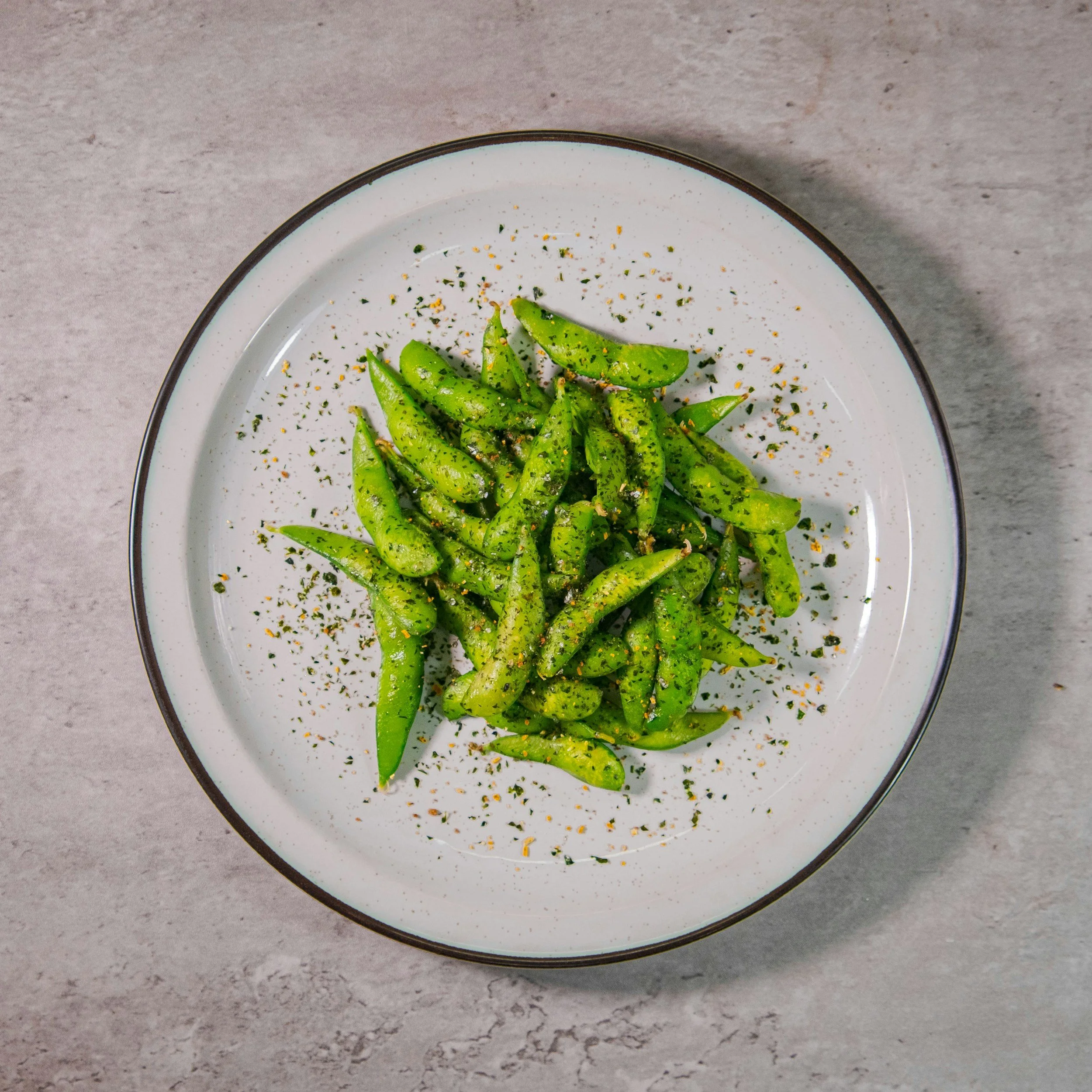
My tip: Edamame beans are a nice plant-based, protein snack. I like the roasted individual packets of Only Bean - Ranch and Buffalo are my favorite flavors! They are an easy snack to take along on-the-go.
Foods That Help With Appetite Changes And Cravings
Research published in Nutrients shows that meals built around protein, fiber, and consistent carbohydrates steady hunger more reliably than lighter options that leave you reaching for more an hour later. The foods that help with menopause-related appetite changes and cravings are mostly everyday staples—no specialty supplements or strict elimination plans required.
Anchor meals with protein. Greek yogurt, eggs, beans, fish, and nuts all count. University of Sydney research suggests that when protein needs go unmet, the body keeps signaling hunger, which can lead to eating more overall without ever feeling satisfied.
Pair carbohydrates with fiber or protein. Whole grains, fruit, and legumes work well here. This pairing slows digestion and keeps blood sugar steadier, which means fewer sharp hunger swings between meals.
Plan one or two satisfying snacks on purpose. Trying to avoid snacks entirely often backfires late in the day. A small, deliberate snack—like a handful of nuts or yogurt with fruit—tends to reduce stress eating more reliably than willpower alone.
Limit added sugars and refined carbohydrates. These can spike and crash blood sugar quickly, which amplifies cravings rather than settling them, especially when sleep or stress is already making appetite harder to regulate.
Think staples, not specialty products. The NHS supports a balanced diet of everyday foods like vegetables, dairy, and fruit as a foundation for managing menopause symptoms. No expensive powders required.
Stress And Poor Sleep Can Quietly Drive Weight Gain
Stress and poor sleep can make menopause weight gain worse by disrupting the hormones that regulate hunger and fat storage—independent of what or how much you eat. When both are elevated, the body genuinely signals more hunger and holds onto abdominal fat more readily, which is why willpower alone rarely solves it.
Your Hormones Are Sending Mixed Hunger Signals
Poor sleep and chronic stress both disrupt the hormones that regulate appetite. Research shows that sleep disruption during the menopause transition increases evening hunger and promotes fat storage around the abdomen. Separately, elevated cortisol from ongoing stress lowers leptin and raises ghrelin, which are the hormones that tell you when you're full or hungry. The result is a body that genuinely signals more hunger, regardless of how much you've eaten.
Cravings After a Hard Day Are Real
When stress runs high, the body often craves starches and carbohydrates specifically. That pull toward bread, crackers, or sweets in the evening is not a character flaw. It's a hormonal response. Emotional eating in that moment feels like relief because, briefly, it is. Recognizing this pattern makes it easier to plan for it, rather than feel defeated by it.
Simple Anchors Work Better Than a Perfect Plan
Nighttime wake-ups and a packed schedule leave little room for elaborate routines. What actually helps is structure, not perfection. Eating breakfast consistently, keeping evening meals balanced with protein and fiber, and pausing for a moment before reaching for a stress snack can each reduce the frequency of reactive eating. These are small habits, not an overhaul. Our post on staying energized after 40 outlines how anchoring meals at predictable times supports both energy and appetite control through hormonal shifts.
Menopause Weight Gain FAQ
Most questions about menopause weight gain trace back to the same few assumptions: that the scale moved because willpower faltered, that eating less is the obvious fix, or that the body is simply working against you now. The answers below are grounded in current evidence—and they tend to be more specific, and more encouraging, than most diet messaging suggests.
Is menopause weight gain inevitable?
Weight gain is common, but it is not fixed. Body composition does shift during menopause—especially toward more central fat—but published clinical evidence shows that habits around food, movement, and sleep can meaningfully influence the outcome. The scale is not the whole story, and you have more influence than most diet messaging suggests.
Should I just eat less, or does what I eat matter more?
Eating less is not the most useful starting point. Clinical evidence supports focusing on adequate protein, consistent meals, and resistance training to preserve muscle and keep appetite manageable. Cutting calories too aggressively can worsen fatigue and hunger, making it harder to stay consistent. Our blog on metabolism after 40 covers this in more depth.
Does meal timing actually matter after menopause?
It can, yes. Spreading protein across meals rather than concentrating it at dinner helps support muscle maintenance throughout the day. Mayo Clinic guidance also notes that calorie needs shift with age, so the same eating pattern from your forties may not serve you as well now. Small adjustments to structure often matter more than dramatic changes.

MyTip: Try practicing mindful eating moments. Take a moment to ask yourself, “By eating this, will it get me closer to my goal health?”
When does emotional eating or stress signal it is time to get extra support?
When stress eating feels automatic, or when repeated dieting has left you more confused than before, that is a clear sign that general advice is not enough. A registered dietitian can help you identify patterns, build realistic structure, and address the emotional side of eating without shame or restriction. Learn more about personalized nutrition counseling that works with your goals.
Build A Plan That Fits Your Body Now
What works at menopause looks different from what worked at 35—and that isn't because willpower has slipped or hormones have simply won. Clinical evidence points to a specific combination: realistic calorie targets, resistance training to preserve lean mass, and the plant-forward, lower-glycemic eating pattern that Harvard T.H. Chan School of Public Health research links to meaningfully lower menopause-related weight gain risk.
Muscle, appetite, and stress-related eating aren't three separate problems. They're three levers on the same system—and a plan that addresses all three is the one most likely to hold.
The goal is a routine you can repeat on a hard week, not just a good one.

My tip: A lot of clients report a positive difference in their body composition once they begin a strength training program. There are plenty of beginner classes on YouTube that you can try today!
Stress-aware habits, consistent protein, and structured meals all matter more than perfection. When broad advice stops translating into real life, personalized support makes the difference. Our Weight Loss Nutrition services offer customized meal planning, virtual or in-person sessions, and insurance-accepted options so you can get guidance that fits your body and your life right now.